Hello, Welcome to Tibet Native Tour
Tashi Delek, Welcome to the holy land Tibet !
Hi, Tibet Native Tour, a local based travel agency in Lhasa city, is the best assistant to help you plan authentic, tailor-made and valuable trip before your visit, also the ideal companion to take care of your travel from transfer, dinning to accommodation. During past years, we have managed to help thousands of visitors realize their Tibet dream tour. And our service has been highly recognized and commended by customers.
Our philosophy is simple and direct - to provide you best travel experience in Tibet which is not only valuable but also enjoyable. What we are good at is offering well-designed and diverse Private Tibet Tours, fixed-departure Group Tours, and customizing a trip to match your interests, tastes and budget. To take you to explore the REAL Tibet, we use the local Tibetans as your tour guide and drivers, and add unique local experience of culture and history into your trip. Enjoy your adventure!
Welcome to Tibet, a place that feels like it exists in a different world—where the air is thinner, the sky is bluer, and the mountains are higher than your dreams could have imagined. If you're reading this, you're probably wondering what makes Tibet so special. Well, let me tell you—it's not just the stunning landscapes, the ancient monasteries, or even the yaks that wander through the mountains (though they're pretty charming). Tibet offers a kind of peace and spiritual awakening that you can't find anywhere else. The Tibetan plateau isn’t just a place on the map; it’s a journey to the soul.
So why should you Visit Tibet? It’s not just a holiday; it’s an experience. A true adventure, full of history, culture, and natural wonders that will take your breath away—literally (yes, the altitude can be a challenge!). Whether you're exploring the vibrant streets of Lhasa or gazing at Mount Everest from the base camp, Tibet has a way of drawing you in. But before you pack your bags, let’s break down what you need to know about your Tibet Tour, including the best time to visit, the essential sights to see, and some important tips to help you make the most of your trip.
As the Top Tibet tour operator, Tibet Vista promises to present the ultimate travel experience to world-wide tourists via a galaxy of carefully-engineered tour packages in Tibet. From small group tours with frequent departures throughout the year to customized private tours in Tibet, we focus on providing you with the best Tibetan travel services and taking you deep into the REAL Tibet.
On top of that, we take good care of you during your days in Tibet. From planning your trip with a professional Tibet travel consultant to daily sightseeing tours accompanied by a seasoned local Tibetan guide, we are always with you throughout the tour in Tibet.
Moreover, we provide you with more travel experiences in Tibet, such as trekking, cycling, Tibet train journey, cultural festival experience, etc. Whatever you are looking for in Tibet, wherever you enter Tibet from, we ensure you a pleasant and safe Tibet tour according to your needs.
There are places you visit, and then there are places that quietly change you. Tibet belongs firmly to the second category.
High on the Tibetan Plateau, closer to the sky than almost anywhere else on Earth, Tibet has long stirred the imagination of travelers, pilgrims, and explorers. Snow‑capped mountains shimmer like mirages. Prayer flags dance with the wind, carrying whispered hopes upward. Monks debate philosophy with laughter and intensity. Time, somehow, moves differently here.
At Tibet Native Tour, we have lived and worked in Tibet for decades. This is not a destination we discovered on a map — it is a place we call home. In this comprehensive guide, we will walk you through everything you need to know to plan a meaningful, smooth, and unforgettable journey to Tibet.
This article is written especially for first‑time Western travelers who want accurate information, cultural context, and practical advice — without the fluff or confusion often found online.
Tibet Permit, sometimes referred to as the “Tibet visa” or Tibet Travel Permit (TTP), is an essential travel document that international tourists must obtain to enter Tibet besides of a valid Chinese visa. Whether you're boarding a flight or train to Lhasa, the Tibet Permit needs to be checked according to the policy. So it's important to make sure you have one before you set off on your journey.
How to get Tibet Travel Permit, Successful Application Tips
Tibet Travel Permit, also known as Tibet Visa or Tibet Entry Permit, is an indispensable travel permit for international tourists to enter Tibet in addition to Chinese visa. For every foreign traveler, Tibet Permit is required as a must entry pass to board the flight or Tibet train bound for Lhasa.
As the largest Tibetan local travel agency, we promise your Tibet travel permit in 2026-2027.
If you are planning a trip to Tibet in the near future, I would recommend contacting a local Tibet-based travel agency to make arrangements. You can reach out to Lhamo for assistance.
Contact: Lhamo
WeChat: 86 13989989889
WhatsApp: 86 13989989889
E-mail: TibetTravelAgency@gmail.com
All foreign visitors are required to have a China visa when entering Tibet Autonomous Region (TAR) via China. (Except for Singaporean, Japanese & Mongolian citizens who don’t need a China Visa while the visit is no longer than 15 days in accordance with the treaty between them and China). Additionally, you will need a Tibet Travel Permit, which we will organize as part of our service. No China visa is required in advance if you go through Nepal and we will provide the Tibet Permit on arrival in Kathmandu.
If you have anything unclear or any questions about the visa & Tibet Travel Permit, please contact to our trip advisor at TibetTravelAgency@Gmail.com
If you are planning to arrive in Lhasa via mainland China, you would need to apply for your Chinese visa from the Chinese Embassy in your own country from the closest Chinese Embassy.
Here’s a sample for the visa:
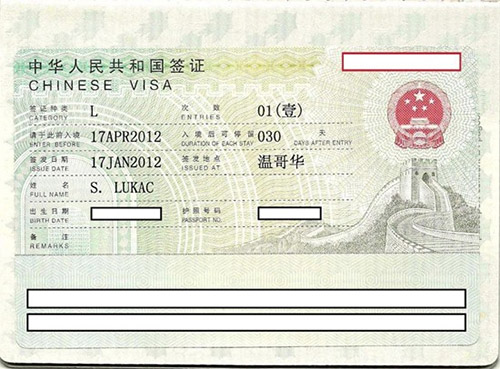
The visa application form asks you a number of questions-your travel itinerary, means of transport, how long you will stay, etc-but you can deviate from this as much as you want. You don't have to leave from the place you specify on your visa application form.
It may ask for you to list the places in China that you plan to visit. You will be kindly suggested to not mention ‘Tibet’ as your destination. You may just tell them that you are planning to visit eg: Beijing, Chengdu, Shanghai or Xian. As the consulate/embassy will ask you to supply the Tibet entry permit first to make sure your visa to be approved without having the Chinese visa first. This will cause problem as it is in the conflict with the requirements at the Tibet Travel Bureau for the permit application. There’s a chance that your application will be denied and you cannot go to Tibet just because of visa problems.
The requirements maybe have slight difference in different countries. For details, please refer to the local embassy’s website. For Example: for US travelers, you can refer to http://www.china-embassy.org/eng/visas/
Chinese visas fall into four types: diplomatic visa, courtesy visa, service visa and ordinary visa. Ordinary visas are further divided into the following categories:
L - Travel F - Business D - Resident G - Transit X - Student Z - Working C - Crew J - Journalist
|
Visa Category |
Eligible Applicants |
|
C |
Foreign crew members of means of international transportation, including aircraft, trains and ships, or motor vehicle drivers engaged in cross-border transport activities, or to the accompanying family members of the crew members of the above-mentioned ships. |
|
D |
Foreigners who intend to reside in China permanently. |
|
F |
Foreigners who intend to go to China for exchanges, visits, study tours and other non-business activities. |
|
G |
Foreigners who intend to transit through China. |
|
J1 |
Resident foreign journalists of foreign news organizations stationed in China. The intended duration of stay in China exceeds 180 days. |
|
J2 |
Foreign journalists who intend to go to China for short-term news coverage. The intended duration of stay in China is no more than 180 days. |
|
L |
Foreigners who intend to go to China as a tourist. |
|
M |
Foreigners who intend to go to China for commercial and trade activities. |
|
Q1 |
Foreigners who are family members* of Chinese citizens or of foreigners with Chinese permanent residence and intend to go to China for family reunion, or to those who intend to go to China for the purpose of foster care. The intended duration of stay in China exceeds 180 days. |
|
Q2 |
Foreigners who intend to visit their relatives who are Chinese citizens residing in China or foreigners with permanent residence in China. The intended duration of stay in China is no more than 180 days. |
|
R |
Foreigners who are high-level talents or whose skills are urgently needed in China. |
|
S1 |
Foreigners who intend to go to China to visit the foreigners working or studying in China to whom they are spouses, parents, sons or daughters under the age of 18 or parents-in-law, or to those who intend to go to China for other private affairs. The intended duration of stay in China exceeds 180 days. |
|
S2 |
Foreigners who intend to visit their family members* who are foreigners working or studying in China, or to those who intend to go to China for other private matters. The intended duration of stay in China is no more than 180 days. |
|
X1 |
Foreigners who intend to study in China for a period of more than 180 days. |
|
X2 |
Foreigners who intend to study in China for a period of no more than 180 days. |
|
Z |
Foreigners who intend to work in China. |
* Family members refer to spouses, parents, sons, daughters, spouses of sons or daughters, brothers, sisters, grandparents, grandsons, granddaughters and parents-in-law.
The travel agencies can help most tourists who are holding the L, F, X, Z & D visas into Tibet. Except L visa holders, all the other tourists are required to provide working/expert certificate/ visa invitation letter copy or student ID copy for the permit application in the meanwhile.
Special note: The diplomats, journalists, and government officials may apply the permit under the arrangement by the Foreign Affairs Office of Tibet Government, the travel agencies are NOT authorized to help these ‘tourists’ going to Tibet till now.
If you are coming to Lhasa from Kathmandu, you will be requested to get China visa from Kathmandu because whether you've already got the visa in your country or not, you will have to get a visa in Kathmandu, which is regulated in an official memo between China and Nepal.
You would need to arrive in Kathmandu at least 2 (urgent application) to 6 days (if you want to apply for the visa with normal charge) before your entry into Tibet.
Chinese Embassy in Kathmandu issues visas only on Mondays, Wednesdays & Fridays from 9a.m. to 11a.m. Regarding to this reason we need to adjust the schedule to fit the time for the visa application.
You will need to contact the travel agency in Tibet which will help you to get the visa invitation letter in Lhasa first to make sure your visa application in Nepal can be approved successfully. Your Tibet tour has to be settled down in advance and if you will go on your tour in the mainland of China, the full tour itinerary till you out of China must be scheduled on the application form. The deadline (exact date) you are leaving China will be stamped on your visa, so mostly you will need the help from the agency in Tibet and Nepal in the meanwhile for the application. You only need to find a reliable Tibet agency and then he will help you with the visa invitation letter and permits in Tibet. And he will also arrange the local Nepal agency to apply the visa in Kathmandu for you.
The visa fee (service fee for the application), you may just pay them in cash directly. Here’s the fee for your reference:
| Visa Fee | Normal | Urgent |
| For US Nationality | US$190 | US$230 |
| For Other Nationality | US$110 | US$140 |
So the procure could be: Book the tour with a Tibet agency - send a clear picture/scan copy of your pp by email - the Tibet Travel agency helps you to apply the visa invitation letter in Lhasa - fax to the Nepal agency – you arrive in KTM and meet the local Nepal agency - apply the visa at the embassy - get the visa & start the tour in Tibet
And as you are starting the tour from Nepal, you will also need to apply the Nepal visa: this can be obtained on arrival at the airport or border and visa fee $ 30.00 valid for 15 days multi-entry visa. Need 1 pp size photo even for Nepalese visa. ($ 30 is min. visa fee.)
Note: All the requirements/ fees can be changed without prior notice.
Considering the less developed tourism industry in Tibet as well as the need to protect its ethnic traditions, cultural relics etc, the Tibet Tourism Bureau (TTB) regulates that non-Chinese citizens, including foreign tourists, Taiwan tourists as well as overseas Chinese who already got the local passport must obtain Tibet Travel Permit (also known as Tibet Visa but actually not a visa) from TTB except a valid passport and China visa if they'd like to visit Tibet.
There are three kinds of permits may be involved during your Tibet tour. The Tibet agency will be able to obtain you all necessary permits if you book a tour with them.? Here’s the types for the permits you may need:
1. Tibet Entry Permit (TTB permit) - which you have to obtain in order to enter Tibet before you get to Tibet. If you do not travel to closed or restricted areas but just have a few days in Lhasa area, you only have to obtain this permit.

If you are taking the train to Tibet, the permit copy should be fine, and please take at least 3 copies on to make sure if they will need it for a record. Most time the travel agency will fax or send to you at least 1 day before you start the tour, you may just need to print it out and take it along with you;
If taking the flights into Tibet, the original permit (physical one) will be checked when you change your boarding pass or pass the check-in counter. Usually the agency will need the exact address where you can get the permit 7 days prior the departure date. The hotel at the last stop city before Tibet would be perfect considering the time for delivering the permit from Lhasa.(This does NOT apply to the one who are taking the flights from Kathmandu to Lhasa; the tour guide will hold the original permit waiting at the airport instead.)
2. Aliens' Travel Permit (PSB permit) - which we have to obtain for you when you are planning to travel to the closed areas in Tibet, such as Mt. Everest, Nagri, Sayka, Tsedang and etc.

3. Tibet Military Permit - which we have to obtain for you if you are planning to travel to some military sensitive areas, such as Nagri, Nyingchi or some places through the overland tour to Lhasa from Chengdu or Yunnan or Xining. It takes 1-2 weeks to obtain this permit, so if you want to travel to places like those, it will be best to plan the trip 30 days prior the departure date at least.

Note: The permit situation is subject to rapid and unpredictable change. Contact us directly to get the current situation at once.
If you’re planning to visit Tibet, obtaining a Tibet Travel Permit is a necessary part of the journey. This permit is required for all foreign nationals who wish to travel to Tibet, and it must be obtained through a licensed travel agency. Here’s everything you need to know about how to apply for the permit, what documents are required, and how to make the process as smooth as possible.
The Tibet Travel Permit is a special permit issued by the Tibet Tourism Bureau, and it is required to enter Tibet Autonomous Region (TAR). The permit allows you to travel within Tibet and visit key tourist destinations such as Lhasa, Everest Base Camp, and Namtso Lake.
It’s important to note that while the Tibet Travel Permit allows you to travel within Tibet, it does not cover certain restricted areas like Mount Everest Base Camp, which require additional permits. For remote regions, your travel agency will assist in arranging these extra permits.
The process for obtaining the Tibet Travel Permit involves several steps. Here’s what you need to know:
Book a Tour with a Licensed Travel Agency
You cannot apply for a Tibet Travel Permit on your own. To obtain the permit, you need to book a guided tour with a licensed travel agency that specializes in Tibet tours. You’ll be required to provide a few essential documents during the booking process.
Documents Required
Valid Passport: Ensure your passport is valid for at least six months beyond your planned date of departure.
Chinese Visa: You will need a valid visa for entry into China. If you’re visiting Tibet from another country (such as Nepal), this will need to be arranged before arriving in Tibet.
Tour Details: Your travel agency will need to know your itinerary and the dates you plan to be in Tibet. This information will be submitted as part of your permit application.
Processing Time
The Tibet Travel Permit takes about 10 to 15 working days to process. It’s important to plan ahead and apply for your permit at least two to three weeks before your trip.
Collecting Your Permit
Once your Tibet Travel Permit is approved, the agency will either mail it to you or have it ready for pick-up in China. You will need to have a printed copy of the permit with you when entering Tibet, as authorities will check it at the border or airport.
For some areas, you’ll need additional permits:
Mount Everest Base Camp: If you plan to visit the Everest Base Camp, you’ll need a separate Special Permit.
Military Zones: Areas like Nyingchi or parts of Tingri require additional military permits.
Your travel agency will handle all these special permits as part of your tour package, so you don’t need to worry about applying for them individually.
Independent Travel is Not Allowed: Independent travel in Tibet is not permitted. You must travel with an authorized guide and in a group or private tour.
Government Restrictions: The Tibet Travel Permit process is subject to government regulations, and the permit system can occasionally change. It’s essential to check with your travel agency for the latest rules.
No Last-Minute Applications: Since the permit takes time to process, last-minute applications are not possible. Plan well in advance to avoid complications.
If you are considering a future trip to Tibet and require assistance with obtaining a Tibet Travel Permit for foreign visitors, please feel free to contact our professional travel consultant, Lhamo. You may reach her via WhatsApp at +86 13908917080 or by email at TibetTravelAgency@Gmail.com . We are committed to providing you with detailed expertise on Tibet travel and dedicated support throughout the permit application process.
Conclusion:
Tibet Permit isn’t equated with “Tibet visa”, as it’s issued by Tibet Tourism Bureau and it’s not affixed to your passport. Instead, it’s a piece of paper that outlines the duration of your visit and your travel plans, granting you enter Tibet. You may also need additional permits such as an Aliens’ Travel Permit and a Military Permit depending on where you are visiting in Tibet. But no worries about that, your travel agency will take care of all the necessary permits for you.
Day 1: Arrival in Lhasa – The Gateway to Tibet
Your adventure begins as soon as you land in Lhasa, the capital of Tibet. But here’s the thing—this isn’t your average “arrive, hit the ground running” type of destination. Lhasa sits at an elevation of over 11,000 feet (3,500 meters), so take it easy. The first thing you’ll want to do is acclimatize. High-altitude sickness is a real thing, and if you rush it, you’ll feel the effects. So, take a moment to absorb the magic of the city’s sky-high monasteries and serene Tibetan Buddhist culture.
You’ll be picked up at the airport or train station, and driven to your hotel where you can relax and prepare for the days ahead. Enjoy the peaceful atmosphere and sip some warm Tibetan tea, which will help you relax and get ready for your adventure.
Day 2: Lhasa’s Mystical Monasteries – A Glimpse into Tibet’s Soul
On your second day, get ready to dive into Lhasa’s rich culture and history. Your first stop? The world-famous Potala Palace. This towering structure, once the winter residence of the Dalai Lama, is an architectural marvel perched on the side of a mountain. As you wander through its vast halls, you’ll be in awe of the ancient Tibetan artifacts, murals, and the spiritual energy that seems to seep from every wall.
Next, we’ll visit Jokhang Temple, the spiritual heart of Tibet, where Tibetan pilgrims make their way to offer prayers and meditate. The temple’s golden roof and intricate wood carvings tell stories of Tibet’s deep religious roots, and the sense of reverence in the air is palpable.
Finally, wander through Barkhor Street, the bustling market that surrounds the Jokhang Temple. Here you’ll find everything from traditional Tibetan handicrafts to religious relics, and it’s the perfect place to pick up souvenirs. As you stroll down the street, you’ll encounter Tibetans in traditional clothing, many of whom are spinning prayer wheels or chanting mantras.
Day 3: Monasteries and Mountains – Discovering Lhasa’s Ancient Temples
The third day is for exploring more of Lhasa’s monasteries, which are a huge part of the Tibetan way of life. We’ll head to Sera Monastery, one of the largest and most famous monasteries in Tibet. Sera is known for its “debate courtyard,” where monks engage in heated debates on Buddhist philosophy. You’ll be amazed at how passionate and animated these debates are—this is definitely not your average classroom setting.
Next, we’ll visit Drepung Monastery, once home to thousands of monks and one of the largest monasteries in the world. The sheer scale of this place is overwhelming, and its tranquil atmosphere makes it an ideal spot for reflection and meditation. Explore the different courtyards and chapels, each of which tells a different part of Tibet’s spiritual story.
Day 4: Yamdrok Lake – A Sacred and Serene Retreat
On the fourth day, we take a scenic drive to Yamdrok Lake, one of Tibet’s most stunning lakes. The drive itself is a journey, winding through rugged mountains and offering breathtaking views of the Tibetan Plateau. Once you reach the lake, you’ll be struck by its crystal-clear waters and the surrounding snow-capped peaks. It’s no wonder this lake is considered sacred by Tibetans. Spend some time walking around the lake, meditating by its shores, and taking in the serenity of this otherworldly place.
If you're a photographer, this spot is a dream—capture the dramatic contrast between the bright blue of the lake and the stark white of the mountains. It's truly a sight to behold.
Day 5: Shigatse and Tashilhunpo Monastery – Uncovering Tibet’s Rich History
Today, we travel from Lhasa to Shigatse, Tibet's second-largest city. Shigatse is home to the iconic Tashilhunpo Monastery, the seat of the Panchen Lama. The monastery’s intricate architecture and sacred artifacts give you a deeper understanding of Tibetan Buddhism. While here, you can also enjoy a glimpse into Tibetan life, as the area is less touristy than Lhasa.
After exploring the monastery, take some time to stroll through Shigatse’s local markets, where you can interact with friendly locals and sample traditional Tibetan food. Shigatse offers a more laid-back vibe compared to Lhasa, allowing you to experience the quieter side of Tibet.
After your time in Shigatse, get ready for one of the most iconic experiences of your Tibet Travel journey—the trek to Mount Everest Base Camp. This will be one of the most unforgettable moments of your trip. Yes, you’re going to stand at the foot of the world’s highest peak!
But before you get too excited, let’s talk about the reality of getting there. The road to Everest Base Camp is an adventure in itself, with winding paths through rugged terrain and ever-changing weather. Along the way, you’ll pass through Rongbuk Monastery, a quiet, simple place where monks live in harmony with the surrounding mountains. From here, you’ll get your first glimpse of Everest—well, the north face, anyway. It’s a powerful sight that will leave you in awe.
Once you arrive at the Everest Base Camp, take some time to absorb the sheer majesty of the place. Standing at over 5,000 meters (16,400 feet) above sea level, you’re at the very heart of the Himalayas, surrounded by snow-capped peaks and glaciers. The feeling of standing in the shadow of Everest is indescribable—prepare to be humbled by the raw beauty of nature.
For those who are particularly adventurous, you can even stay in basic guesthouses near the base camp and experience the environment at night, with the stars hanging impossibly close above you.
After the excitement of Everest, it’s time to relax by one of Tibet’s most stunning natural wonders—Namtso Lake. Located about 250 kilometers north of Lhasa, Namtso is one of the highest saltwater lakes in the world, perched at an altitude of 4,718 meters (15,476 feet).
This is a place of peace and solitude. The shimmering blue waters of the lake reflect the surrounding snow-covered mountains, creating a picture-perfect scene that feels like something out of a dream. Spend your day walking around the lake, meditating, or simply sitting in silence, watching the Tibetan nomads herd their yaks along the shore.
At Namtso, you’ll experience the spiritual side of Tibet in a very different way—there’s a sense of calm here that allows you to reconnect with nature and yourself. If you’re feeling energetic, you can hike along the lake’s shoreline or take a boat ride for a different perspective of the area. Either way, this day will give you the chance to slow down and reflect on your journey so far.
As your Tibet Tour nears its end, it’s time to head back to Lhasa for your return journey. You’ll be picked up from Namtso Lake or Shigatse and driven back to the capital. On the way, take in the last glimpses of the Tibetan Plateau, the vast, wild landscapes that have captivated your heart.
Before your flight or train back to the bustling world outside of Tibet, make sure to take some time for one last stroll around Lhasa. Visit any sites you may have missed, or simply relax in one of the city’s peaceful tea houses. Reflect on the incredible experiences you’ve had—the monasteries, the lakes, the high mountains, and the spiritual energy of this sacred land.
So when is the best time to Visit Tibet? Like any destination, the answer depends on what kind of experience you want. Generally, the best time to visit Tibet is during the spring and summer months, from May to October. During these months, the weather is warmer, and most of the key tourist attractions are easily accessible.
May to June: These months offer pleasant weather with clear skies and comfortable temperatures. The landscapes are lush, and it's a great time to explore Tibet’s monasteries and lakes.
July to August: This is peak travel season. The weather is at its warmest, but it can also get crowded, especially in places like Lhasa and Mount Everest. If you don’t mind the crowds, this is a fantastic time for trekking and outdoor activities.
September to October: The weather starts to cool, but it’s still a great time to visit. The autumn months offer breathtaking views of the mountains, and you’ll experience fewer tourists, making for a more peaceful visit.
However, winter (November to April) can also be a magical time to visit, especially if you want to experience Tibet in a more tranquil, less crowded atmosphere. Just keep in mind that temperatures can drop significantly, especially in higher altitudes, and some remote areas may be closed due to snow and icy conditions.
Tibet is an incredibly special place, but traveling here requires some preparation, especially for foreign visitors. Here are some important tips and things to keep in mind before you go:
Altitude Sickness: As mentioned earlier, the altitude in Tibet is no joke. Lhasa, for example, sits at 3,650 meters (11,975 feet), and Everest Base Camp is over 5,000 meters (16,400 feet). Even if you’re in good shape, the thin air can affect your body. Drink plenty of water, avoid alcohol, and take it slow. If you experience symptoms like headaches or dizziness, don’t hesitate to seek medical help.
Permits Required: Foreigners are required to obtain a Tibet Travel Permit to enter Tibet. This is typically arranged through a travel agency. The process involves submitting your passport details and receiving approval from the Tibetan Tourism Bureau. Make sure to apply for the permit well in advance of your trip.
Respect the Culture: Tibet is deeply spiritual, and its culture is intertwined with Tibetan Buddhism. Be mindful of local customs and show respect when visiting monasteries and temples. Always ask for permission before taking photos, and avoid pointing at sacred objects or disturbing monks during their prayers.
Dress in Layers: The weather in Tibet can change quickly, so it’s essential to dress in layers. Even in the summer, the mornings and evenings can be chilly, especially at higher altitudes. Bring comfortable, breathable clothes for the day and warmer clothes for the evening.
Local Currency: Tibet uses the Chinese Yuan (CNY) as currency. While larger cities like Lhasa have ATMs, it’s a good idea to carry enough cash with you, especially if you’re heading to more remote areas where ATMs are scarce.
Tibet is an extraordinary destination, but it’s also a place with unique challenges that every traveler needs to prepare for. From high altitudes to cultural nuances, here are some essential tips to ensure that your trip to the Roof of the World is as smooth and enjoyable as possible.
One of the biggest challenges that travelers face when visiting Tibet is the high altitude. The average elevation in Lhasa is about 3,600 meters (11,800 feet), and areas like Everest Base Camp rise much higher. Altitude sickness can affect anyone, regardless of fitness levels, so acclimatization is key.
Here are some tips:
Take it slow: Give your body time to adjust to the altitude. On your first day, avoid any strenuous activities and let your body rest.
Stay hydrated: Drink plenty of water to help your body cope with the high-altitude conditions.
Avoid alcohol and tobacco: These can exacerbate altitude sickness.
Listen to your body: If you feel dizzy, nauseous, or short of breath, it's important to rest and consult a medical professional.
While most visitors don't experience severe altitude sickness, it’s always better to take precautions. Your travel guide will be experienced in helping you manage this and can adjust your itinerary as needed.
Tibet is a deeply spiritual place, and its people take their culture and religion seriously. As a visitor, it’s essential to show respect to local traditions and etiquette, especially when visiting religious sites.
Here are some tips to keep in mind:
Clockwise around sacred objects: Whether you’re walking around a stupa (Buddhist monument) or prayer wheels, always walk in a clockwise direction. This is considered the correct way to show respect.
Respect religious practices: When visiting monasteries or temples like Jokhang Temple, dress modestly and maintain a quiet, respectful demeanor. Keep your phone on silent and avoid taking photos in areas where it’s prohibited.
Be mindful of gestures: Avoid pointing your feet at statues or holy items—this is considered disrespectful. Also, don’t touch the heads of others, as this is considered inappropriate in Tibetan culture.
Tibet’s weather can be unpredictable, even in the summer months. At high altitudes, temperatures can drop rapidly, so it’s important to pack for all kinds of weather.
Here’s a packing checklist:
Warm layers: Even during the summer, temperatures can fall sharply in the evenings. Pack a lightweight, insulated jacket, fleece, and a warm hat.
Sun protection: The sun is intense at high altitudes, so make sure to pack sunscreen, sunglasses, and a hat with a brim to protect yourself from UV rays.
Sturdy shoes: Tibet’s terrain can be rough, so pack comfortable and durable footwear for walking and trekking.
Rain gear: Even in the dry season, rain can surprise you, especially in the highlands. A waterproof jacket or poncho will be handy.
Tibet’s high-altitude environment can challenge your body in many ways. Here are a few tips to keep your body in peak condition during your trip:
Altitude Sickness: As mentioned earlier, altitude sickness is the biggest health concern. Drink plenty of water, avoid alcohol, and take it slow to help your body adjust.
Food and Water: Stick to bottled water, especially in smaller towns. While food in Tibet is generally safe, it’s a good idea to avoid raw vegetables unless you’re certain they’ve been properly washed.
Medical Kit: Bring a basic first-aid kit, including pain relievers, band-aids, and any necessary medications (such as altitude sickness pills).
Tibet is one of the most pristine places on Earth, with untouched landscapes that are vulnerable to pollution. Make sure to leave no trace by taking your trash with you, using environmentally friendly products, and supporting local eco-friendly businesses.
If you plan to visit Mount Everest or other remote areas, make sure to follow all local rules about waste management.
Travel in Tibet can sometimes be unpredictable. Road conditions can change due to weather, and sometimes permits can take longer than expected. While it’s essential to plan your trip, keeping a flexible attitude will help you make the most of your experience.
For you, Tibet is the ultimate destination - an exotic snow capped land on the roof of the world. For us, it is our home, we've spent years discovering every corner of Tibet for the best things to see and do– and we can't wait to share it all with you.
Our friendly travel experts are always ready to answer any of your questions about Tibet. You can reach us in 3 ways...and we'll respond to you within 24 hours.
Contact E-mail: TibetTravelAgency@Gmail.com
WhatsApp: +86 139 0891 7080